

The S&P 500 keeps pressing toward fresh highs, and the headline print has rarely been less informative. Strength sits with a small group of names while the average stock lags badly. For anyone running a portfolio, the useful question in July 2026 is not where the index closed. It is who is actually participating.
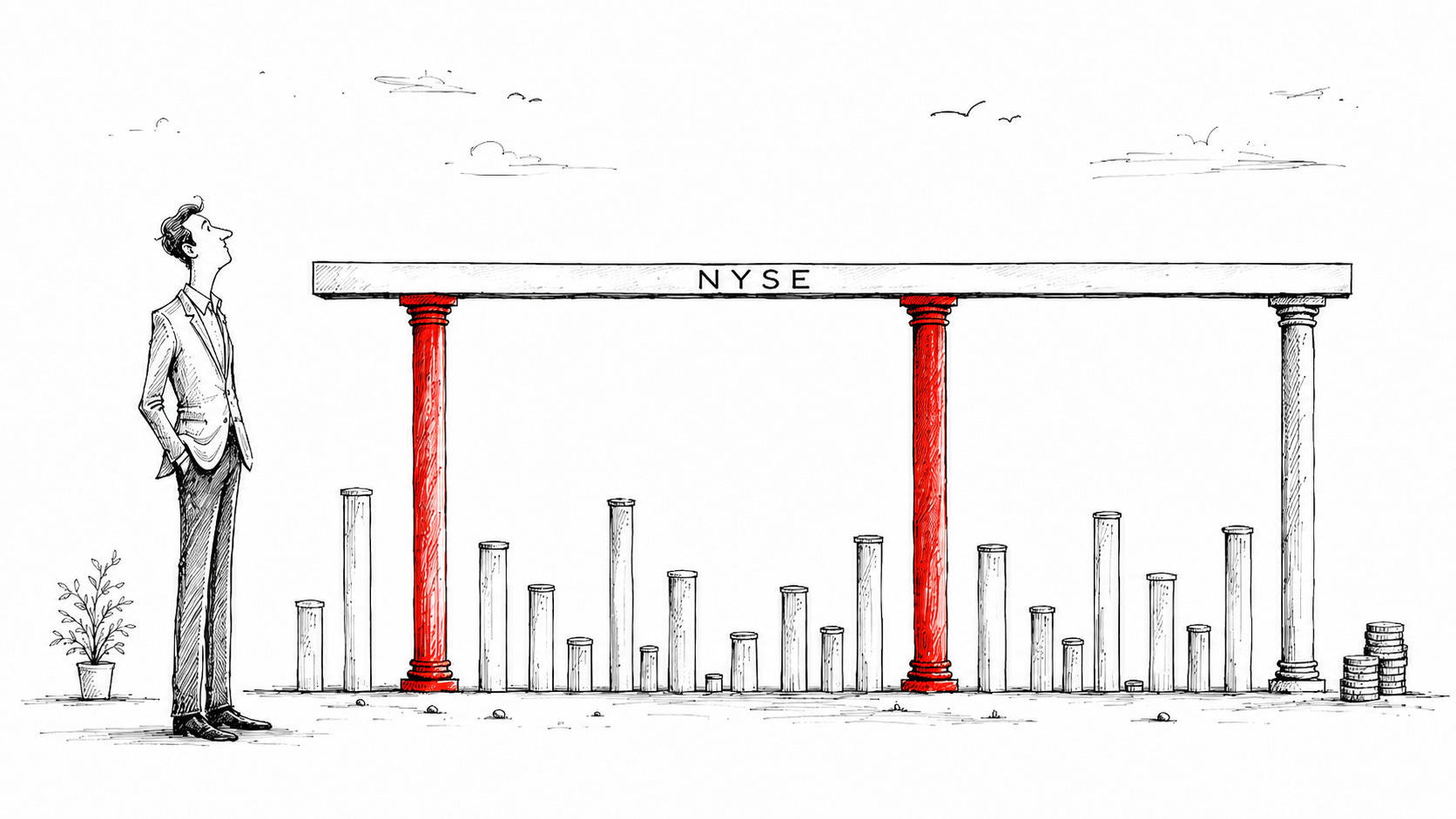
Participation is what separates a durable advance from a fragile one. A rise carried broadly tends to pull back shallowly, with rotation keeping the trend alive. The same index level carried by a handful of mega-caps rests on a much narrower base, and the data says today’s base is narrow indeed. Goldman Sachs Research describes current breadth as among the thinnest since the dot-com era, with a small set of AI-infrastructure beneficiaries expected to deliver roughly half of this year’s S&P 500 earnings growth. Charles Schwab’s mid-year work adds the internal detail: the average index member has endured a maximum drawdown near 21% this year while the index itself stayed composed. On a single session at the end of June, per Savior Wealth’s structure analysis, the fifty largest companies contributed about 0.87 points to the index while the other 450 were a net drag, and one session later the pattern flipped entirely.
When the top of the index and the average stock disagree that often, the practical instruction is simple: size positions for a market that can turn fast, not one moving in a straight line.
And yet thin breadth is a condition, not a verdict. Narrow rallies can persist for a long time, especially when the leadership is earning its price rather than borrowing it. First-quarter earnings grew about 18% year over year, and Goldman has raised its 2026 estimate to roughly $340 per share. Leadership concentrated in genuine profit growth is sturdier than leadership built on multiple expansion. Both facts are true at once: participation is fragile, and the earnings under the leaders are real. That combination argues for selectivity, not for exiting equities or forcing a top call.
What does selectivity look like structurally? This regime is defined by dispersion, a wide gap between the best and worst performers, and dispersion rewards relative positioning over index bets. Leadership currently sits with AI infrastructure, semiconductors, and parts of energy while much of the broader list has quietly deteriorated. A long book drawn from genuinely strong industries and a short book drawn from genuinely weak ones expresses that spread directly. The regime sets the posture; the individual stock sets the entry.
The behavioral hazards run in both directions. A rising index whispers that everything is working, which invites chasing what has already moved and concentrates risk at exactly the wrong moment. The opposite reflex, deciding that narrow breadth guarantees a crash and stepping aside, has been a reliable way to miss earnings-driven advances. Consumer sentiment recently printed a record low in the University of Michigan survey while equities ground higher regardless. Sentiment is a poor clock. Breadth weighed against earnings and leadership is a better one, and even it describes the weather rather than predicting the exact day it rains.
The outlook, honestly stated, is a description of conditions rather than a forecast. Participation is narrow. Leadership is concentrated and backed by real profits. The trader who reads the regime first, then works down through industry strength to individual names, stays selective without stepping out of the market. In a tape like this, process handles what prediction cannot.
Full research and methodology at imgeld.com